

Energy efficiency with impact: How an energy manager is making Bălți more resilient and economical
Bălți has never had an energy manager before. What is it like to be the first?
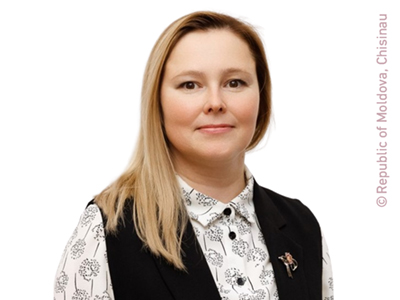 I want to say that it is a great responsibility, but also a unique opportunity. Being the first energy manager of the municipality of Bălți means I’m not taking over an already established system — I’m building the entire municipal energy management framework practically from scratch: rules, procedures, clear indicators, and mechanisms for monitoring energy consumption. It’s a mix of pressure and enthusiasm. I know that the decisions and standards we set now will shape the way the city manages energy for years to come. That’s why I focus on creating a simple, functional, and measurable system that delivers concrete results: lower consumption, reduced bills for public institutions, and investments directed precisely where they make the biggest difference in energy efficiency.
What part of your job energizes you the most
What energizes me most is seeing the direct and measurable impact of my work: real reductions in energy consumption and tangible savings for the public budget. When I see that simple measures — technical adjustments, optimizing how systems operate — can lower energy bills, and the money saved can be redirected to other needs of the citizens, I feel I’m doing something truly useful. The fact that this work contributes to a more efficient and resilient city is, honestly, extremely motivating.
After the first few months, how would you describe the city’s energy efficiency and climate resilience to an ordinary citizen?
To put it simply: energy efficiency means the city does exactly the same job, but with far less waste. We have the same good lighting in schools, the same comfortable warmth in kindergartens and hospitals, the same public services for everyone — only we use much less electricity and heat.
How do we achieve that? Through better-insulated buildings, properly adjusted heating systems (no overheating or unnecessary losses), modern LED lighting, and constant monitoring so we can spot exactly where money is being “leaked” and stop the waste. Climate resilience means how well the city can withstand the extreme weather events that are becoming more frequent: long heatwaves, torrential rains, winters with sudden temperature swings, or prolonged droughts. A resilient city doesn’t just react when problems arise — it prepares in advance: it reduces dependence on expensive and unstable energy sources, strengthens public buildings, plans smart investments, and builds more robust infrastructure — for example, planting trees to cool the city or developing local energy sources.
In short:
- energy efficiency = “we spend less to get the same level of comfort and services”
- resilience = “we’re prepared so unpredictable weather doesn’t catch us off guard”
In both cases, we’re talking about better comfort in public buildings, more controllable costs, and a safer city in the long term.
What exactly is your role in this process?
My role is to collect and analyze the municipality’s energy data so we have a clear, comparable picture of consumption patterns. Based on that data, I identify losses, their causes, and realistic opportunities for savings. Then I propose concrete recommendations — both technical solutions and organizational measures — that can be implemented step by step and tracked through clear indicators. At the same time, I support the administration in making informed decisions based on real numbers and actual impact, not on assumptions. In essence, I act as the link between technical analysis, decision-makers, and the practical implementation of measures, so the entire energy management system works coherently and delivers measurable results.
Are there any challenges with being the new person in the city administration? How do you approach building trust?
Yes, there are inevitable challenges when you’re new in a local administration — especially in a relatively new field like energy management. It’s normal to have an adjustment period and some initial skepticism along the lines of “just another initiative that might not last”, as well as resistance to change and preference for familiar old methods. I build trust through open communication and complete transparency. I always explain why I’m proposing certain measures, what they involve, and how we will measure the results. When people understand the logic and see there’s nothing hidden, collaboration becomes much easier. I show deep respect for on-the-ground experience — technicians and institution managers know the real problems best. My role is to translate those realities into feasible solutions — not just theoretical ones, but interventions that can actually be implemented. At the same time, we hold joint working meetings, trainings, and work as a team so we share the same language and the same goals.
Do you think it would be very different if you were working as an accounting manager rather than an energy manager?
Yes, it would be very different. An energy manager doesn’t just deal with financial savings figures — they also deal with energy savings, engineering systems, human behavior, and long-term strategies. It’s a role that combines technical, economic, and environmental aspects, with a direct impact on people’s quality of life and the city’s sustainability. That’s exactly why I love this job so much: I feel I’m making a tangible difference, not just an accounting one.
You initially worked for the Moldovan NGO CONSENS. Could you describe what CONSENS does?
In short, AO CONSENS is a non-governmental organization that operates at regional level to promote the sustainable development of communities and society as a whole. It focuses on socio-economic policies, support for local development, civic engagement, good governance projects, social economy, and sustainability, while actively contributing to the energy transition at both local and national levels.
Will you work as energy manager in Bălți only for a certain period? How can developments continue after you leave?
Yes, the role is time-limited. That’s exactly why it’s essential to build a sustainable system: clear procedures, energy databases, trained staff, and the integration of energy management into the permanent structure of the Bălți municipal administration.
Together with the team, we are doing the following:
- Creating official strategic documents (Regulation on sustainable energy and energy management in municipally owned buildings, Municipal Energy Action Plan, etc.) that remain mandatory regardless of who holds the position;
- Institutionalizing processes (consumption monitoring, green public procurement procedures);
- Involving the local council and the mayor in making long-term commitments;
- Building lasting partnerships with external institutions that will continue even without me.
In short: if, at the end, we leave behind data, regulations, procedures, trained people, and officially adopted commitments, then development continues naturally — and it no longer depends on one single energy manager, but on a stable municipal mechanism.
Given the high energy prices, what quick win have you identified for immediate savings?
The fastest savings come from “small measures” that immediately reduce waste without requiring large investments: correct adjustment of heating systems, careful consumption monitoring, elimination of obvious losses, and optimization of lighting. At the institutional level — quick audits in schools and kindergartens to stop simple losses (leaking taps, windows left open unnecessarily, etc.). These interventions require no major funding, but can deliver visible reductions in bills within just a few months.
How do you evaluate projects such as Energy Transition Town Twinnings 3.0? What role can renewable energy sources play?
The project is excellent and highly relevant for Bălți. Initiatives like this are extremely valuable because they bring concrete examples of proven international best practices. The partnership with Stuttgart provides us with German know-how in energy efficiency, urban management, and investment attraction. It’s a very good model of East-West cooperation that helps cities like ours avoid reinventing the wheel and instead apply already tested solutions. German funding is very welcome and creates long-term sustainability — essential for energy security and reducing dependence on imports.
What role can renewable energy sources play in Bălți and in Moldova more broadly?
Renewable energy sources can undoubtedly play an essential role both for the municipality of Bălți and for the Republic of Moldova as a whole. First and foremost, they directly enhance energy security by reducing dependence on energy imports — a major vulnerability for the country. Locally in Bălți, solar energy has the greatest immediate potential: installing photovoltaic panels on public buildings (schools, kindergartens, city hall, hospitals) can cover a significant part of their own electricity needs and ease the pressure on the municipal budget. In Moldova, renewables are not only an environmental solution, but also an economic and strategic one: they stabilize costs over the medium and long term, stimulate local investment, and create jobs. The best results come when renewables are combined with energy efficiency measures — the two go hand in hand perfectly. In the long run, developing renewable sources helps cities and communities become more resilient to climate change, more energy autonomous, and better prepared for future energy crises.
Social Media